When AI Makes Anyone a "Developer": Reflections from a Coder
AI tools lower the barrier to shipping code—but depth, judgment, and ownership still separate craft from orchestration. Reflections on what remains uniquely human in the AI era.
I've loved coding ever since I can remember. I studied computer engineering, learned multiple languages, and now mostly focus on JavaScript and Python. For me, coding has always been about learning, problem-solving, and the satisfaction of building something from scratch.
But lately, I've been circling a thought I can't shake—and it's due to AI.
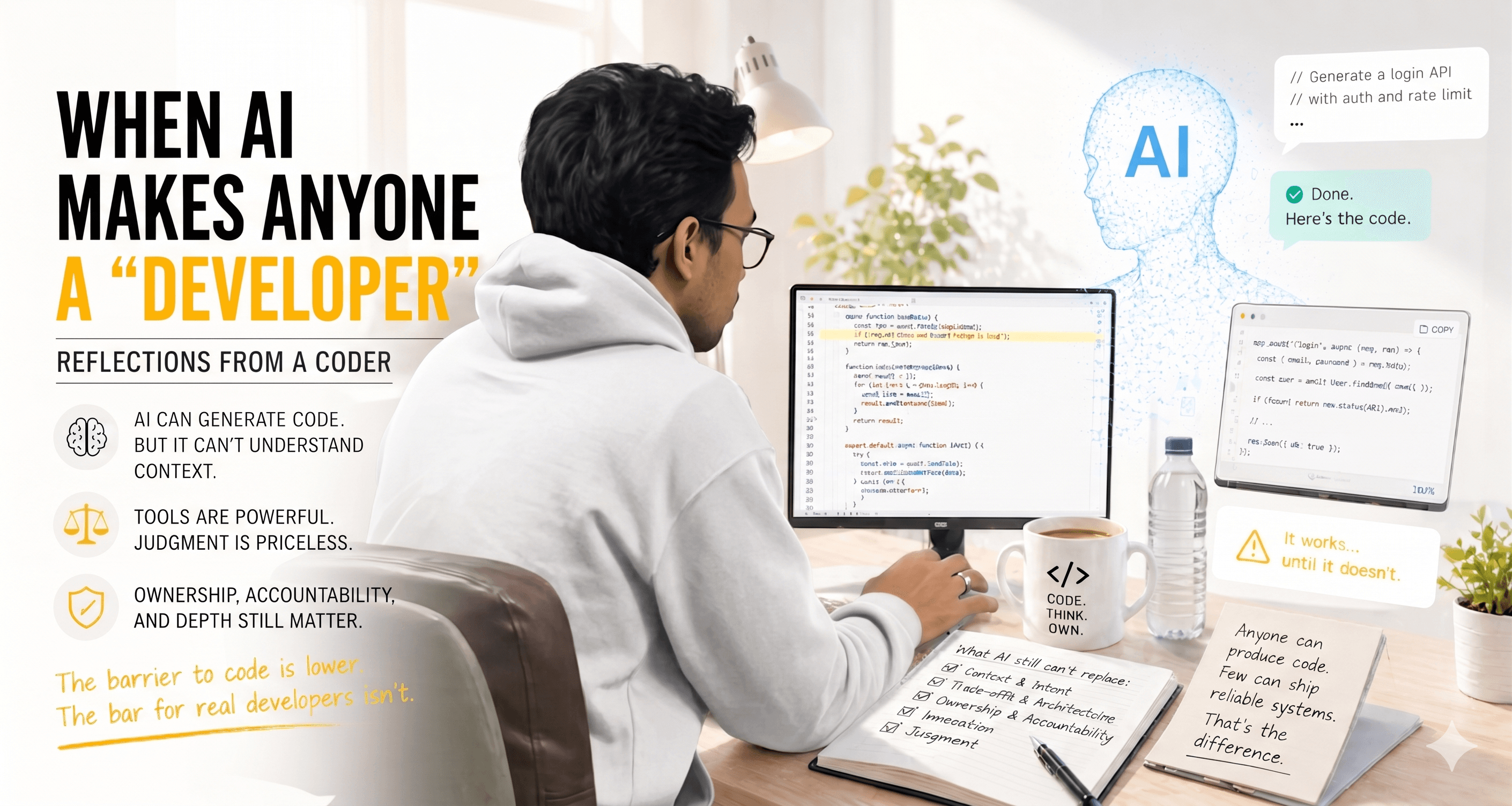
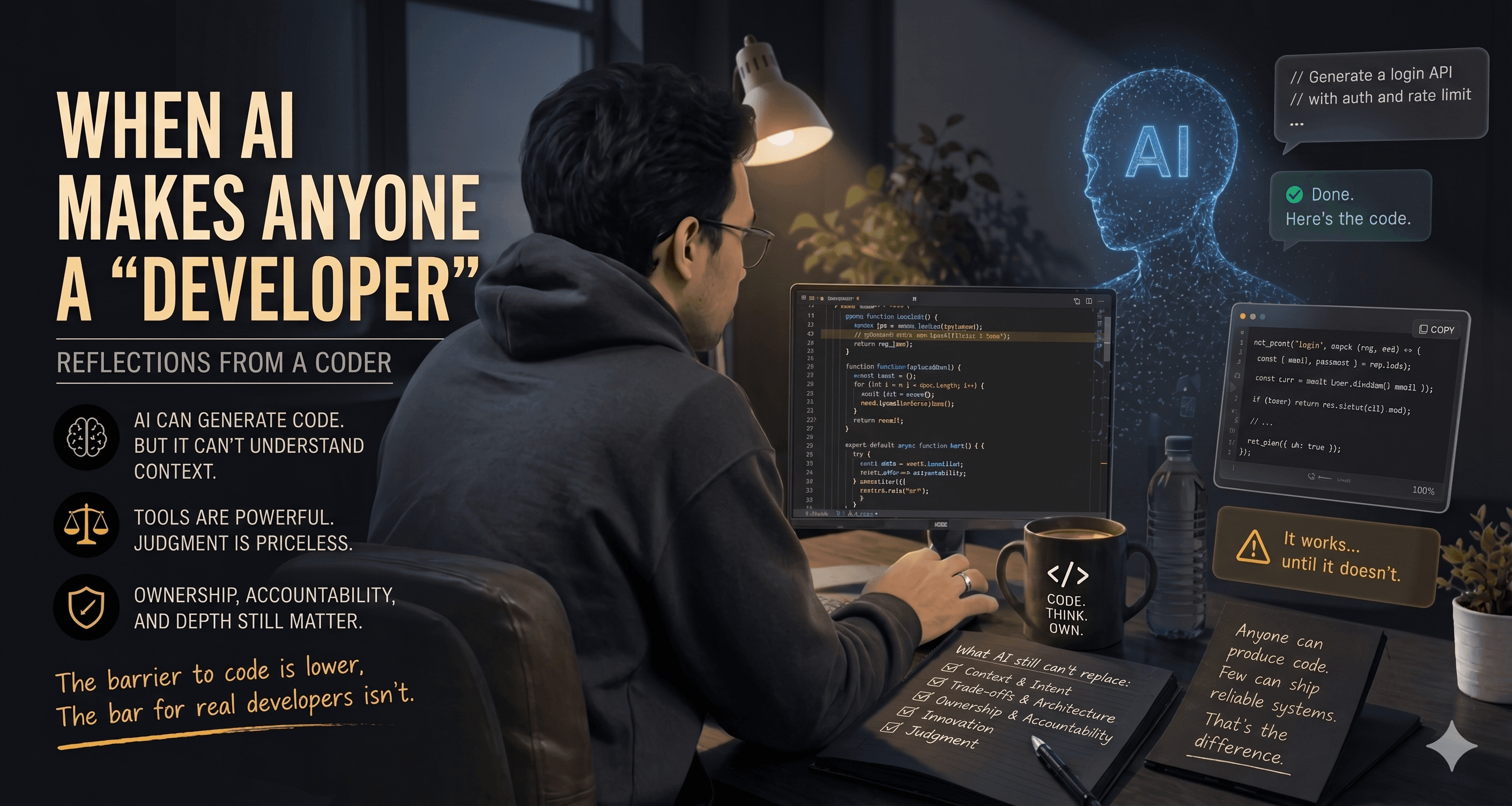
The tools we now have are astonishing. AI can write code, optimize systems, and even suggest architectures. But here's the problem: anyone can be a “developer” now. Even someone with minimal experience can leverage AI to produce results that look polished. On platforms like Upwork, you see this all the time. Titles like “Full Stack Developer” or “Cloud Engineer” are being claimed by people who, in reality, are just orchestrating AI outputs.
It feels… unfair.
It's like hiring a choreographer to create a full dance number, then taking the credit yourself—calling yourself a dancer or choreographer—without ever having done the work. The work may look impressive from the outside, but the skill behind it is fundamentally different. For someone like me, who has spent years building intuition, understanding edge cases, and debugging complex systems, it's frustrating to see this distinction blurred.
And yet, this is the reality we're living in. AI fills gaps—debugging, scaling, optimizing, even generating innovative ideas to some extent. But there are areas AI cannot replace:
What AI still can't replace
- Context & Intent: AI doesn't fully understand the constraints, business logic, or trade-offs specific to your project.
- Trade-offs & Architecture: Choosing the right solution often depends on priorities that only a human can weigh effectively.
- Ownership & Accountability: When something fails in production, you need the experience to trace, understand, and fix it.
- Innovation: True innovation comes from recognizing patterns, opportunities, and gaps—things AI can't originate without guidance.
So, what does this mean for developers in the AI era? I've started thinking about positioning myself not just as a coder, but as someone who:
How I want to show up
- Masters depth over breadth, focusing on AI-resistant areas like complex automation, system optimization, and debugging.
- Orchestrates AI intelligently, using it as a tool while ensuring outputs are correct, maintainable, and performant.
- Documents and demonstrates reasoning, showing thought processes and decisions that AI alone can't claim.
- Leads and mentors, adding value through judgment, guidance, and collaborative expertise.
In short: while AI lowers the entry barrier, it cannot replace skill, judgment, and ownership. The challenge now is not whether AI can code, but how developers leverage it without losing the craft that makes them indispensable.
For me, this is less about fear and more about clarity. I can embrace AI as a tool—but I refuse to let it define what being a developer means. And maybe that's the point: the developers who thrive in this era will be the ones who understand why code matters, not just how to produce it.